Fund a pilot
Help finance measured field validation.
For manufacturers, agencies, investors, and conservation programs.
Growers, sponsors, researchers, and industry partners can participate in structured field validation of Nano Flow Irrigation.
The value of a pilot is the dataset, not the acreage. Choose the role that matches what you can contribute: funding, a qualified site, technical capability, or commercial interest.
Technical inquiries receive a response within two business days.
Funding, field access, technical validation, and commercial demand are distinct pathways. Choose the one that matches what you can contribute or what you need next.
Help finance measured field validation.
For manufacturers, agencies, investors, and conservation programs.
Provide a qualified field location.
For growers, research farms, and land managers with usable water and operating access.
Contribute independent expertise or resources.
For universities, consultants, laboratories, sensor firms, and equipment specialists.
Register interest in using Nano Flow Irrigation after validation.
For growers, operators, designers, and commercial partners assessing future use.
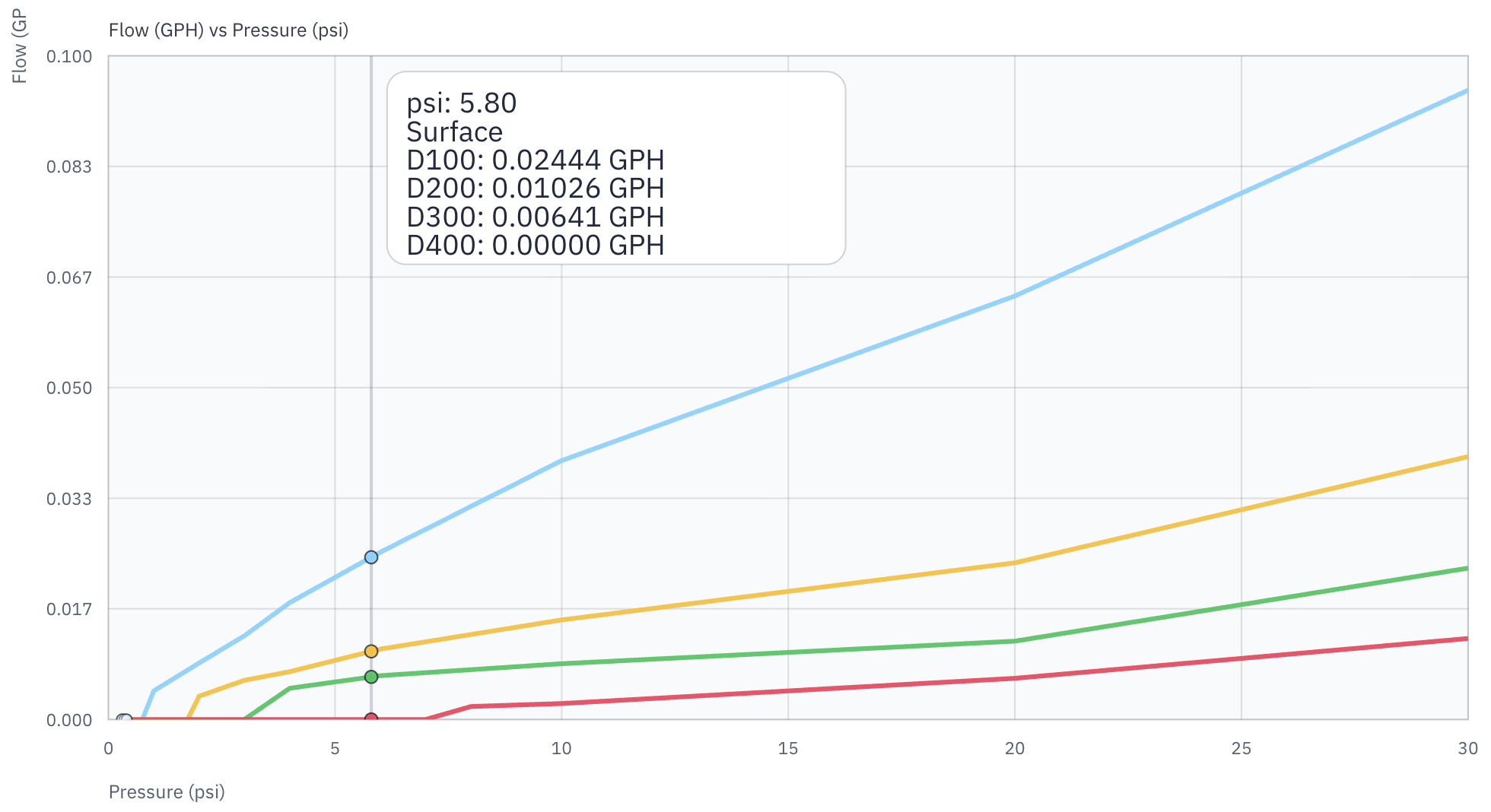
Every level produces participant-specific field evidence. The planned dripline footprint increases with the technical question - from controlled performance, to field consistency, to commercial-system scalability.
*Illustrative planning envelope using a nominal emitter discharge range of approximately 0.01–0.04 GPH per emitter and 12–18-inch emitter spacing. The displayed range reflects the combined low/high cases across emitter discharge and spacing. Actual flow depends on the selected configuration, operating pressure, site hydraulics, and measured emitter performance.
The scale does not simply buy more dripline. Each step changes the hydraulic complexity, spatial sampling, monitoring architecture, comparison design, and decision the evidence can support.
$15,000+
Planned scale: 1,000 linear feet of Nano Flow Irrigation dripline under the agreed standard scope.
$30,000+
Planned scale: 10,000 linear feet of Nano Flow Irrigation dripline under the agreed standard scope.
$75,000+
Planned scale: 75,000 linear feet at one benchmark site—not multiple complete sites.
Review the unified program. The Nano Flow Irrigation Pilot Validation Program 2026 combines participation pathways, package comparisons, evidence boundaries, measurement architecture, responsibilities, and next steps in one document.
Download the Pilot Validation ProgramEach workstream supports a decision about water delivery, field performance, maintenance, or commercial replication.
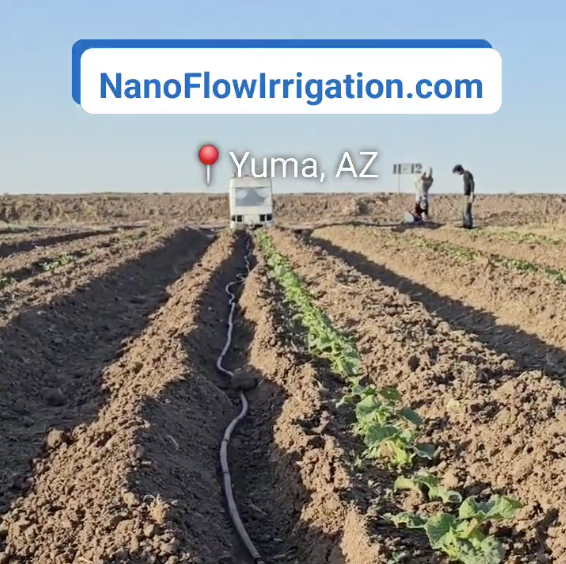
The Yuma Ag Center record is a transparent field-learning sequence—not a claim that the first trial controlled every variable or proved every performance outcome.
Thank you. Nano Flow Irrigation will review the requested pathway and details and respond within two business days.
Review the Yuma technical record while you wait